A PCA Kurdistan partnership pioneers a new way to adopt unreached people groups
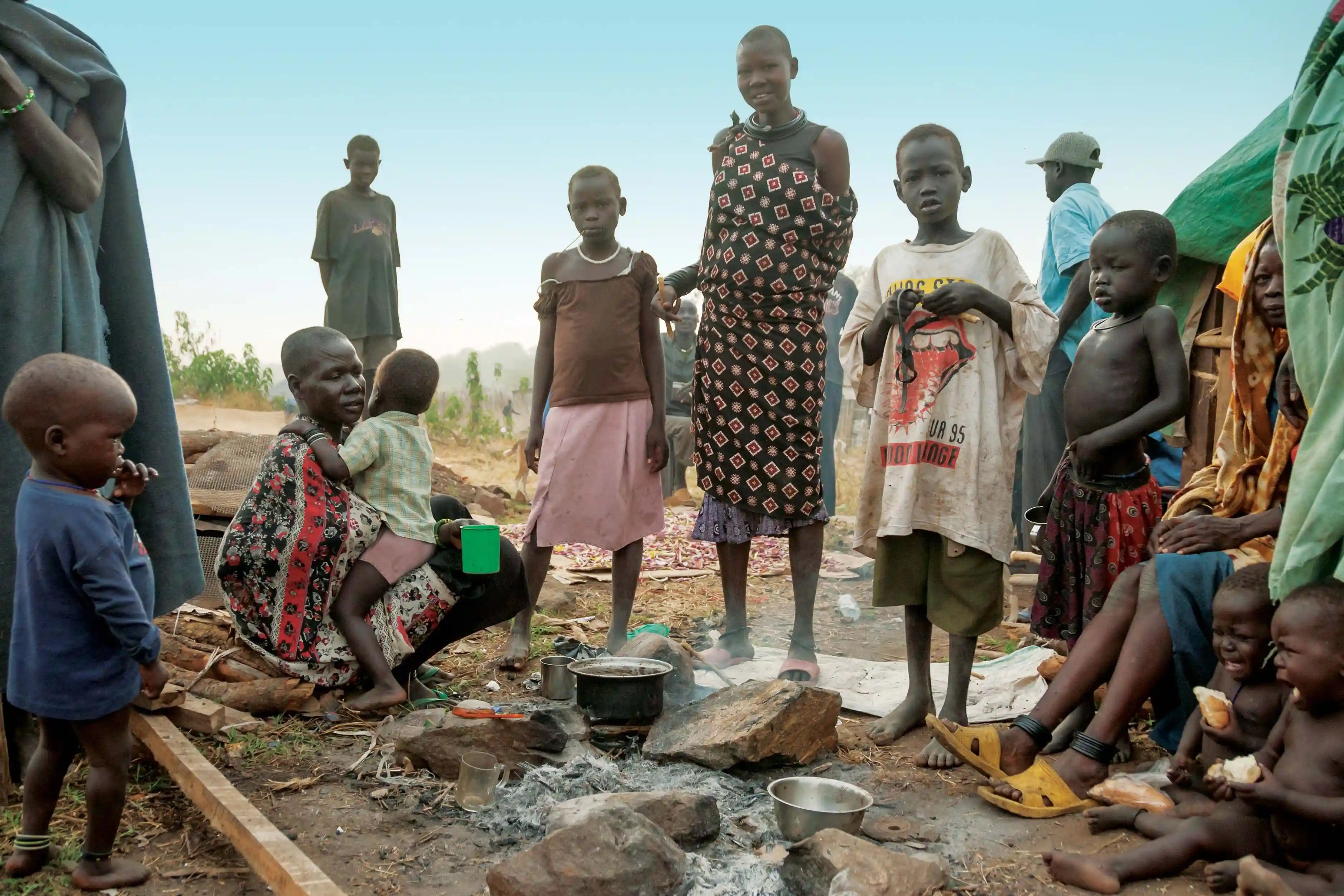
When ISIS attempted a genocide of the Yazidi population in 2014, friends of an MTW field worker in the region traveled to Yazidi refugee camps in northern Iraq to deliver food and supplies and share the gospel to the refugees.
A few years later, back in the U.S., the missions committee at Grace Redeemer Church, a PCA church in Glen Rock, New Jersey, was searching for a way to engage more deeply with unreached people groups.
These two unrelated threads were the beginning of the Kurdistan Partnership—a partnership between PCA churches, MTW, and field workers to advance a church planting movement among the Kurds and Yazidis living in northern Iraq.
Forming a vision to reach a frontier people group
“We need to start work there,” a doctor told MTW field worker Paul Smith*.
Paul serves in an Arabic-speaking country in North Africa. He knew several Christians like this doctor who had been going to northern Iraq to minister in Yazidi refugee camps. Through their work, a pocket of refugees had come to faith in Christ.
“I’m not a church planter and they need a church planter,” she said. Paul, who focuses on theological education, began traveling to the area every few months to teach and meet with the new converts and other Christians in the area. As he did, he began to understand the church landscape.
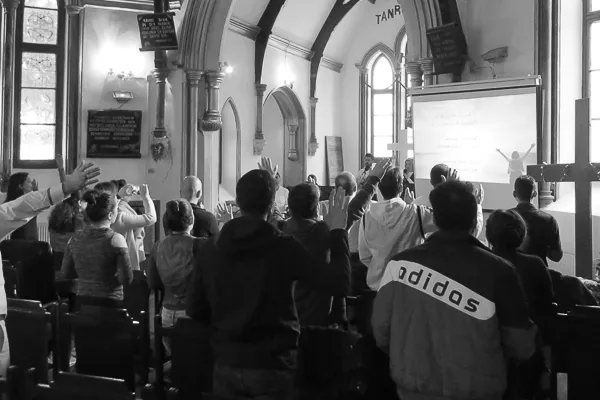
They were working in a semi-autonomous section of northern Iraq called Kurdistan. Many people in the surrounding area have fled there in pursuit of stability and religious freedom. Different Christian denominations such as Chaldean Christians, Assyrian Christians, Presbyterians, and other groups worship publicly and peacefully every week. However, almost all Christian work is in Arabic which is not the heart language of the region’s largest people group—the Kurds.
Over the past 100 years, the few mission efforts to Kurds in this area have fizzled. Today, there are no known Kurdish-speaking, Kurdish-led churches in the local Kurdish dialect in northern Iraq. Currently, only the New Testament is available in this dialect, though there is a team working on translating the Old Testament. According to Joshua Project, nearly 100% of the estimated 30 million Kurds worldwide are Muslim and less than 0.1% (1 in 1,000) identify as a Christian in any sense, making them not just an unreached people group, but a frontier people group.

Over the past 100 years, the few mission efforts to Kurds in this area have fizzled. Today, there are no known Kurdish-speaking, Kurdish-led churches in the local Kurdish dialect in northern Iraq.
The Yazidis that Paul’s friends initially served among are a small religious minority within the larger Kurdish people group. As Paul continued traveling to the region, his ministry naturally expanded beyond the Yazidi refugee camps to engage the broader Kurdish population. He began building relationships, teaching, and seeing others come to faith. In 2020, Paul started working toward recruiting a field team to plant a church and serve among the Kurds and Yazidis in northern Iraq.
Churches commit to starting missions work in Kurdistan
Across the world, Steve Sage, associate pastor of discipleship at Grace Redeemer Church in Glen Rock, New Jersey, was helping his missions committee investigate ways to support work among unreached people groups.
“One of the ideas I had was that perhaps we could collaborate on a project with other churches in our presbytery,” says Steve. “It would be great to work together with our presbytery to adopt an unreached people group that MTW is working with.”
Steve reached out to MTW and connected with MTW Northeast/mid-Atlantic Regional Director Greg Hills. They, along with members from Grace Redeemer and three other churches in the West Hudson and Metro New York Presbyteries, went on a vision trip to Kurdistan and two other fields also engaging unreached people groups.
“Our goal was to prayerfully consider if the Lord would lead us to partner together and work together with MTW to help in one of these fields,” says Steve.
When the group met up with Paul in northern Iraq, he explained that he was working on getting a team there.
“I remember Paul’s sales pitch to us,” says Steve. “It was, ‘You guys probably don’t want to do this. I know churches like to see results, and there’s nothing there. It’s going to take years. This is a long-term commitment.’”
After returning to the U.S., the vision trip members met every week over Zoom to pray and discuss which field, if any, they should support. After a month and a half, God led their hearts to adopt the hardest of the three hard fields—Kurdistan. In January 2023, they officially formed the Kurdistan Partnership with MTW.
The Kurdistan Partnership is unique because it reverses the normal dynamic between supporting churches and field workers. Instead of a field worker seeking a church’s support for their ministry, churches that are part of the Kurdistan Partnership are committed to starting field work. They are owning the responsibility to seek out, develop, and send workers. Steve says, “Churches are leading the way to help mobilize and work through our denomination’s agency to send the first team to a place where there is no team.”
Because the churches are taking the initiative, this also means they are involved in the strategy. All partnership members are aligned in an intentional and specific vision to plant Reformed and covenantal churches throughout Kurdistan. And since the partnership involves several churches and those churches have committed to Kurdistan instead of a single field worker, Steve prays the partnership will weather any personnel changes in the U.S. churches or on the field.
“Obviously, we’ll be committed to the workers that go but we’re committed to the field, to the work, to see the church planting movement emerge,” says Steve.
“Obviously, we’ll be committed to the workers that go but we’re committed to the field, to the work, to see the church planting movement emerge,” says Steve. “One of the really encouraging things about it is, by working with other churches as well as Paul and Greg, there is a comaraderie and broader perspective than any one local church is going to have. Which I think makes it richer and also makes it sustainable.”
New believers in need of a church
There are over 7,000 unreached people groups across the globe today and, while none of them are easy to reach, the church has more momentum among several of them than it does amongst the Kurds. Why Kurdistan? Why choose a people group that has been historically difficult to engage? One with no Kurdish-led churches and scant missions efforts? One that doesn’t even have the whole Bible translated in their language?
Besides their theological and missiological conviction to take the gospel to a place it has never been, the group chose Kurdistan because of the people. There may not be many, but there are Kurdish Christians and they passionately love Jesus, long to make His name known, and need help from the global Church. One such person is a young woman named Nalin*.
Nalin suffered from horrific night terrors. For months, she and her family tried to get rid of them by praying, visiting doctors, and seeing the holy men. Nothing worked. One day, she met a Christian who shared the gospel with her and told her to pray in Jesus’ name. When she went home and told her family, they initially warned her to stay away from that man, claiming he was dangerous. But they were also out of options. Willing to give it a try, they all began to pray for relief from the nightmares in Jesus’ name. God mercifully answered their prayers—not only healing Nalin but also bringing others from her family to faith in Jesus.
Willing to give it a try, they all began to pray for relief from the nightmares in Jesus’ name. God mercifully answered their prayers—not only healing Nalin but also bringing others from her family to faith in Jesus.
The Lord then led Nalin to her now-husband, another new believer whom God compassionately brought to Himself. Together, the young couple is studying God’s Word, ministering to other Christians, and excitedly telling non-believers about Jesus.
“She’s a really good discipler,” says Paul. “I think about what the Lord did to her in saving her, and how He has grabbed her heart—and that’s what she wants to tell people. And then in His providence brought her to this man who is a really good thinker and … has a real call to be a pastor! It just really encourages us.”
He continues, “When you see God doing things like this, it’s not on a grand scale, but it is happening and that’s why we want to see a team there. So that for couples like this, we could just walk with them in discipleship because this is all brand new to them.”
New Kurdish converts don’t have much support but that isn’t stopping them from reaching out to their friends and family. On the latest trip to the area, MTW Northeast/mid-Atlantic Regional Director Greg Hills met a young Kurdish man named Shivan* and his group of friends. Shivan is one of the few Kurds who grew up with Christian parents. Recently, he began attending a brand new non-denominational bilingual church in the city that offers one worship service in English and one in Kurdish. The past few months, he has been inviting teammates from his ultimate frisbee team to church with him.
Sitting at lunch after church, Greg turned to one of Shivan’s friends and asked him what he thought about the service.
“It’s very different but it’s interesting,” the young man replied.
“He was like, ‘But I’m Muslim so don’t waste your time,’” says Greg. “But he goes every Sunday with his ultimate frisbee buddy and he’s just intrigued enough because he can hear it in Kurdish.”
Stories like these are small glimpses of something larger God is doing beneath the surface and why MTW and PCA churches desire to work in Kurdistan—so that people like Nalin and her husband receive sound teaching and effective training for church ministry; so that Nalin and Shivan have a place to worship in their own language; so that unbelievers, like Shivan’s friends, can hear the gospel in Kurdish and understand it isn’t a foreign message but good news for them and their people; so that those who are suffering from things like night terrors or life in a refugee camp can find hope in Jesus and His great and good kingdom.
A team backed by churches
There are currently eight PCA churches that are part of the Kurdistan Partnership. Any church, agency, or individual is welcome to join as long as they sign and agree to the commitments and expectations outlined in the Kurdistan Partnership Agreement. A steering committee, which includes members from the churches, MTW staff, and field workers directs the partnership’s activities and decisions.
Though the region is impacted by the current war, the committee is still motivated to start a new work in the area. Their highest priority is to identify and mobilize team members, particularly a team leader. Though this first team will be going to an unreached field, the Kurdistan Partnership has removed some of the initial obstacles. These candidates have a group of churches ready to support them financially and pastorally. When they go, they will meet a handful of passionate Christians eager for discipleship and to work for the growth of God’s kingdom among the Kurds. And, as always, the greatest encouragement is that our merciful and sovereign God has already planted seeds in this unreached people group and He is able and willing to turn those small seeds into a tree that spreads its substantial branches throughout Kurdistan.
*Names changed for security reasons.
If you would like to learn more about the Kurdistan Partnership, contact Greg Hills at [email protected]. If you are interested in serving there, check out the opportunity details and/or fill out our Get Started form.

Get good news every week! Subscribe to Stories & More for stories of God's work, videos from the missions field, and a wide range of missions topics.
Chelsea Rollman
Chelsea Rollman is a marketing specialist and staff writer at MTW. She formerly served as the girls’ discipleship coordinator at Village Seven in Colorado Springs, and as a marketing assistant at The White Horse Inn. Chelsea graduated from Covenant College in 2016 with her B.A. in English. She and her husband, Hudson, live in Jacksonville, Florida, and attend Christ Church Presbyterian where Hudson serves as the youth director.