When war becomes routine
How the church in Ukraine is holding fast to Christ
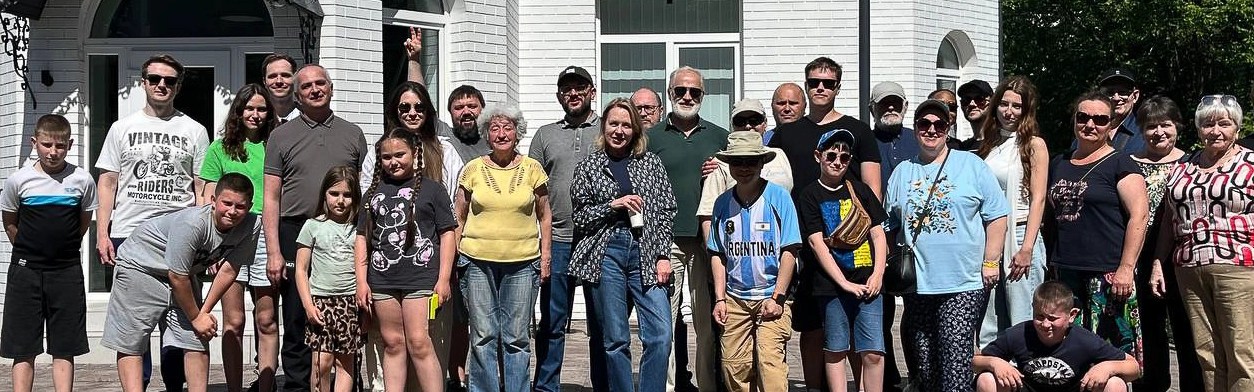
On February 24, 2022, at 5 a.m., Pastor Ivan Bespalov of Holy Trinity Presbyterian Church in Kyiv, Ukraine, was awakened by the explosions of a Russian missile attack. He turned on the TV, saw that Russia had launched a full-scale invasion, and immediately started messaging his congregants in the church’s group chat. Russian troops were advancing quickly, and Ivan rushed to coordinate evacuations through the city’s only open road.
Four and a half years later, Ivan watched from his kitchen window as a Russian ballistic missile hit a storage facility near his apartment. This time, he didn’t blink an eye.
“It’s become a routine, and it’s scary, but you learn to become accustomed to it,” Ivan said.
Since February 2022, Ukraine has been undergoing constant Russian attacks, and MTW missionaries and church leaders from their partner denomination, the Evangelical Presbyterian Church of Ukraine, daily navigate caring for a people who experience deep trauma while simultaneously surviving it themselves.
“It was a shock for all of us.”
In 2014, Russia covertly took over Ukraine’s Crimean Peninsula. Fighting along the border began and continued for the next seven years until late 2021, when Western military experts warned the Russian army was amassing troops and equipment near the border.
“The tension grew in January and early February of 2022, but we never believed that it [would come] to this aggression from Russia,” Ivan said. “So that night when the war began, we were shocked.”
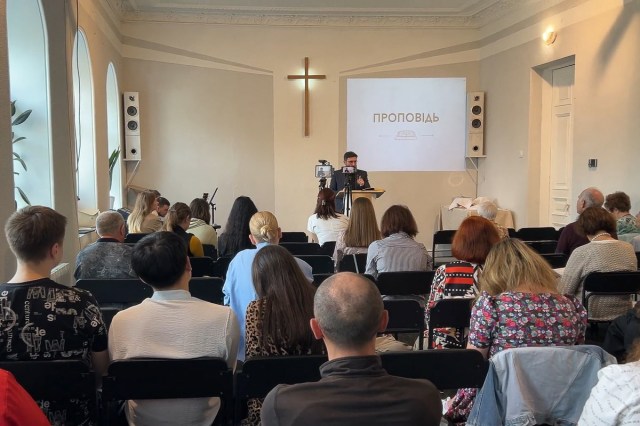
About half of Ivan’s congregation evacuated Kyiv, but Ivan said he felt called to stay. He helped coordinate food, medicine, and counseling, especially for homebound church members, and started a daily virtual prayer meeting. Due to restrictions on movement within Kyiv, the church moved their service online, which Ivan noted God had been preparing them for during COVID.
Meanwhile, two Ukrainian MTW city teams—Kyiv and Odesa—relocated to neighboring countries where they coordinated evacuations and humanitarian aid. MTW Ukraine Country Director Jon Eide said they were concerned for the safety of MTW missionaries, but also for pastors of their partner churches in danger of Russian occupation. Within 24 hours, they wiped their website of any information about the denomination, interviews with pastors, and names of churches and leaders.

“We were trying to figure out what we’re supposed to do, how we are supposed to be faithful to the call and the church and the family and balance all these things,” Doug said.
MTW missionaries based in Lviv, a city in the relatively safer western part of Ukraine, set up a temporary refugee shelter in their church offices. From there, they coordinated with a church plant in Krakow, as well as with other missionaries across Europe, to shuttle refugees out of the country and humanitarian aid in.
“It was nuts,” Doug Shepherd, MTW team leader in Lviv, said. He found an online manual on how to set up a refugee center and began coordinating shelter and clothing for the deeply traumatized individuals fleeing Russian attacks. He told his family to pack evacuation bags, and did his best to field requests for aid and calls from husbands sending their families across the border.
“We were trying to figure out what we’re supposed to do, how we are supposed to be faithful to the call and the church and the family and balance all these things,” Doug said.
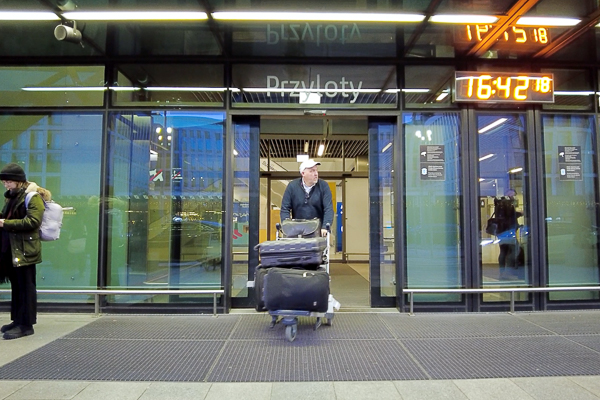
Doug recognized the need for a coordinated aid program and asked his home presbytery in North Texas to pack crates with items that fall into three categories: life-saving aid, hygiene, and medicines, and then fly with them on commercial aircrafts to Krakow. From there, MTW staff would drive the crates over the border and distribute them across Ukraine. The project, christened Crates for Ukraine, took off and churches, individuals, and youth groups started packing their own.
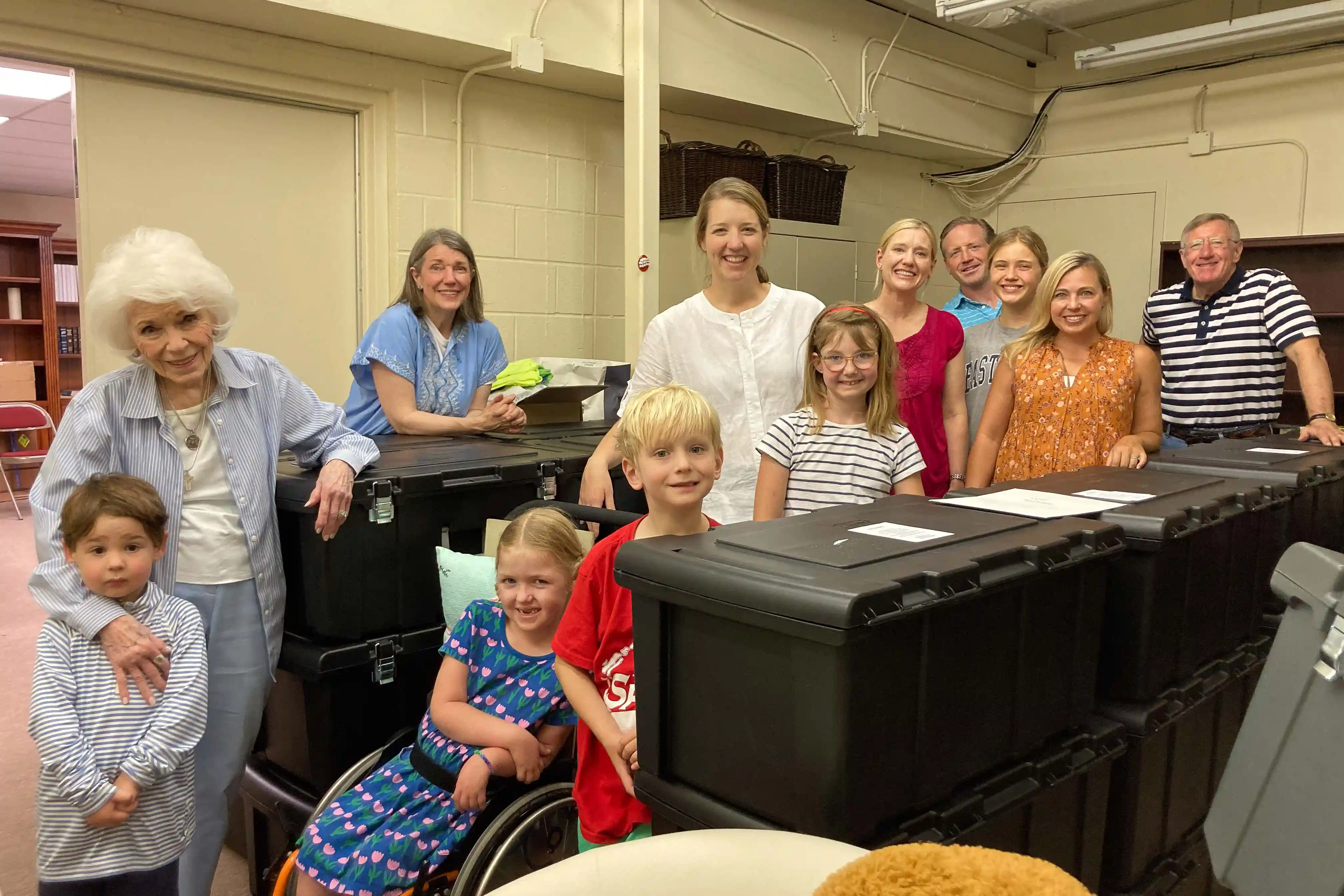
“You can really have the fingerprints of church members and kids in the States on these products that are going all the way to the frontline churches. It was very personal,” Doug said.
Crates for Ukraine staff and volunteers continue to pack and deliver crates. The program has already provided over 79 tons of aid to more than 100,000 people across 3,500 locations. Printed on each box is the name and website of the EPCU church in Lviv, and Isaiah 43:2-3, written in Ukrainian:
When you pass through the waters, I will be with you;
and through the rivers, they shall not overwhelm you.
when you walk through the fire you shall not be burned;
and the flame shall not consume you.
For I am the Lord your God,
the Holy One of Israel, your Savior;
I give Egypt as your ransom,
Cush and Seba in exchange for you.
The unthinkable becomes routine
In Ukraine, war is now background noise.
Pastor Ivan said that on his evening walks, he often sees Russian drones fly by. No one bothers to hide anymore. People look up to make sure the drone isn’t flying directly at them, then resume their activities.
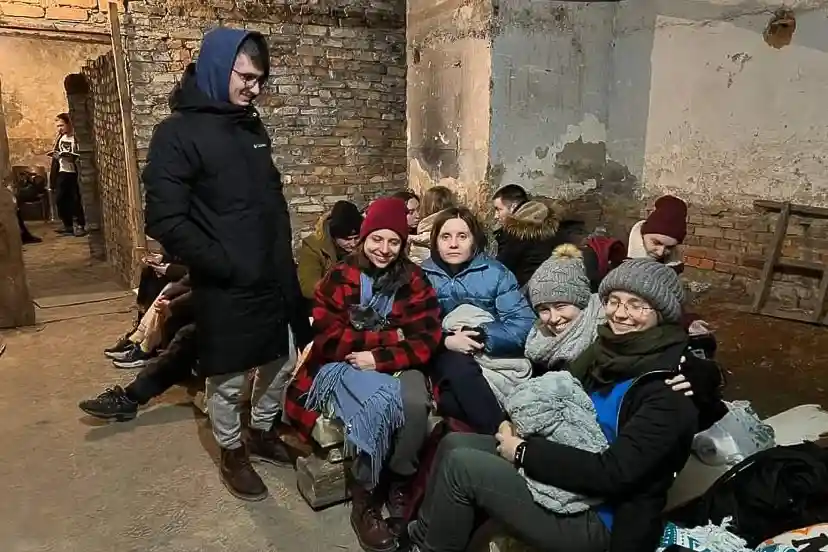
Families often spend the night in Kyiv’s underground subway system, and children are used to the “camping” trips. Many struggle with insomnia from nightly missile attacks, and Ivan said he is still working on regaining his normal sleep schedule.
Jon Eide travels frequently to Ukraine to support the pastors. He described a strange mix of normalcy and constant life-and-death situations. News channels now include air raid predictions that warn of the trajectory and weapons being fired. After large missile attacks, Jon texts or calls friends in the affected cities.
“Everybody says something along the lines of, ‘We’re okay. It was a loud, long night. We slept in the hallway, or we slept in the bomb shelter… and now I gotta get up and go to work … traffic’s gonna be terrible this morning,’” Jon said.
In Kherson, a frontline city where Russian First-Person-View Drones (FPVs) hunt civilians in what is being called a “human safari,” the pastor at the EPCU church told Jon he was preaching a sermon when his whole congregation got up and left. He thought it must have been something he said, then quickly realized there was an air raid alert.
Another pastor recently told Jon, “We all live, every day, by Heidelberg Catechism question one; What is your only comfort in life and in death? That I am not my own, but belong—body and soul, in life and in death—to my faithful Savior, Jesus Christ.”
Life continues—people get married, go to school, and open businesses—but the shadow of war looms ever present, and churches are learning to live in the middle of it.
How should we then live?
Jon said the resounding question of the Ukrainian church, since the country’s founding, would be reminiscent of the title of Francis Shaeffer’s book “How should we then live?”
How should we then live—now that we are a country that remains at war? What if I die today? What should I do to protect my family? Should I enroll in the armed forces? How do I not let anger against evil consume me?
These are all questions Ukrainians are asking, and missionaries and church leaders are doing their best to help navigate them.
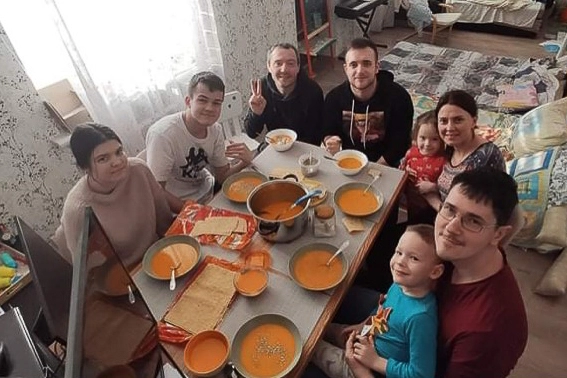
Doug said he often points people to the Psalms in the face of difficult questions.
“The gospel of grace is the answer. God Himself is the answer. And Scripture, specifically the Psalms, are heavy enough and deep enough to speak to and encourage people in the darkest of times,” Doug said.
For some questions, especially those from congregants who have suffered heartbreaking loss, the best answer is crying along with them, Ivan said.
While leaders continue to shepherd their flocks through daily danger, Ivan said the church is pivoting from survival mode to active growth despite the ongoing challenges.
Recently, the afternoon after a big air raid, Ivan’s church went to a main square in Kyiv and invited people to church, sang songs, and preached about their hope in Christ.
“We have the sense of urgency of building the kingdom of God,” Ivan said.
Ivan said his own faith has been strengthened in the last few years, and that even in deep suffering, he has witnessed the Lord’s miraculous protection. A new member was leading a mortar division on the front lines when a missile hit next to him, propelling debris straight at his head. It struck his helmet and knocked him out. His skull was grazed, but he only suffered a concussion. Last week, Ivan officiated this man’s wedding to a woman from his church.
Mark Aharkov, an elder at an EPCU church in Kharkiv, a city less than 20 miles away from the frontlines, runs his church’s humanitarian ministry. They serve hundreds of internally displaced people every month, and Mark said he’s seen even older individuals who are normally set in their worldviews and beliefs start to ask questions about faith.
“I saw how many non-believers became Christian throughout this ministry. I do not have the question why God is allowing such war or such suffering because I saw that He’s using this challenging time … for His kingdom, for His glory, and for the goodness of His church,” Mark said.
Mark has a wife and three young sons, which would allow him to leave the country with his family, but they feel called to remain in his city near the front lines.
“I believe that the safest place is to be is in the will of God,” Mark said. “And if God called us to serve, we have to serve, and we believe that there is something bigger than our lives and our safety, and if Christians will leave the struggling and suffering, who will help? Who will show them Christ? Who will show the light?”
Raising up new leaders
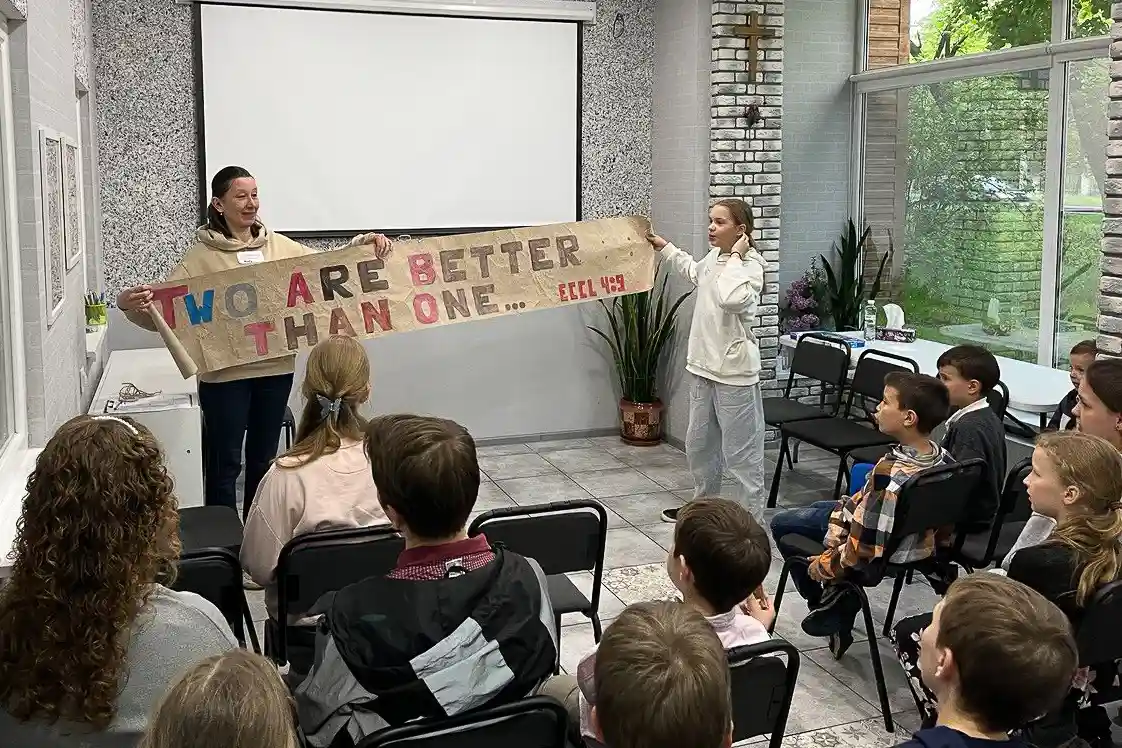
Since the war began, many churches have lost elders and deacons (although each church still has a pastor) to evacuation or the draft. Ivan said he has seen God providing for the need—quickly maturing new believers and placing in them a love for God’s people and His Word.
But the spiritual need is great, and the laborers are few. In Western Ukraine, Shepherd said, people are open to conversation—especially if it’s not about the war. Children and youth need a safe place to play or learn English, and if they ask deeper questions, they need missionaries there to walk alongside them.
MTW is looking for more teaching elders from the States to serve as church planters, and for church members from the U.S. to consider being a part of those teams. He encourages anyone curious about the opportunity to contact MTW.
“We think this is the best time to start new teams because there’s a great need. Not wait until the war’s over, but start doing it now,” Doug said.
“We think this is the best time to start new teams because there’s a great need. Not wait until the war’s over, but start doing it now,” Doug said.
One Body, One Church
Suffering has united the church across Ukraine, and across the world. In the first year following the 2022 invasion, Christians from across the country congregated in Lviv, bringing with them different languages and cultures. But Doug said they didn’t divide into city groups, they all worshiped together. Every Wednesday, they hosted a dinner and read a psalm. It was an open space to cry, process, meet other believers, and remain focused on Christ in the midst of the chaos.
The North American church remains heavily invested in the EPCU, and Ivan said MTW plays a key role in every ministry and every church in Ukraine, including supporting and counseling pastors. The crates they send help Ivan’s church serve and reach new believers. Ivan also said he recently attended General Assembly and was encouraged by how many people continue to pray for Ukraine.
Mark, who continues to coordinate humanitarian efforts funded by foreign churches and organizations, said he’s been blown away by the support of brothers and sisters in Christ across the globe.
“I felt that when we are in difficult circumstances and in difficult situation, churches from all around the world, they felt this and they support us,” Mark said. “They pray for us. They lifted up our hands, like Moses, so we feel that we are not alone.”
Interested in serving in Ukraine? Visit mtw.org/serve to get started.

Get good news every week! Subscribe to Stories & More for stories of God's work, videos from the missions field, and a wide range of missions topics.
Hannah Herrera
Hannah Herrera is a freelance journalist based in Rionegro, Colombia, where she also serves in campus ministry at her local university. In her free time, she enjoys reading, spending time with friends, and playing sports with her husband, David.