Values that matter
Mercy, justice, and the love of God
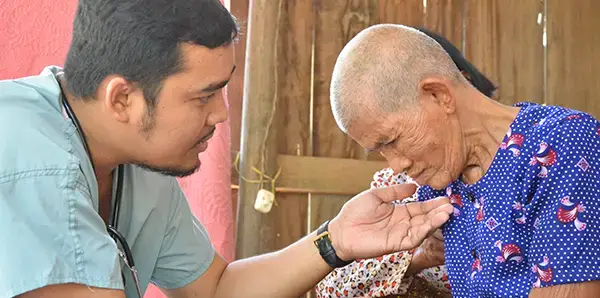
MTW’s mission is to make disciples among all nations. MTW’s values are how we do them. They inform where we work, what we do, and conversely, what we choose not to do as we aim to be wise stewards. Whether it’s running a church-based medical clinic in Peru, a seminary in France, or mentoring church planters in Ukraine, our values are at the center. MTW’s four key values are “the church,” “grace-based,” “Reformed and covenantal,” and “mercy, justice, and the love of God.” In this installment of our series “Values That Matter,” we’ll talk about MTW’s value of mercy, justice, and the love of God.
Acts 1:8 gives the church a clear mission: “You will be my witnesses in Jerusalem and in all Judea and Samaria, and to the end of the earth.”
The mission isn’t vague or mysterious—we’re called to be His witnesses. But what exactly does that mean? Is it preaching the Word? Is it caring for the poor?
A witness is someone who testifies. For Christians, that means testifying to the gospel—the good news that Jesus Christ is King and that His kingdom is breaking into the world. And the invitation to join this kingdom is open to everyone through faith and repentance.

A witness is someone who testifies. For Christians, that means testifying to the gospel—the good news that Jesus Christ is King and that His kingdom is breaking into the world. And the invitation to join this kingdom is open to everyone through faith and repentance.
The Old Testament gives vivid pictures of what God’s kingdom looks like: a world with no war, hunger, sickness, or even death. Isaiah 35 promises that “the eyes of the blind shall be opened … the lame shall leap like a deer … the mute will sing for joy.”
Fast-forward 700 years or so to Luke 7. John the Baptist is in prison and begins to wonder if Jesus is really the Messiah. So he sends his followers to ask. Jesus replies:
“Go and tell John what you have seen and heard: the blind receive their sight, the lame walk, lepers are cleansed … the dead are raised … the poor have good news preached to them.”
In other words, the signs Isaiah talked about are happening. Jesus’ miracles aren’t just displays of power—they’re previews of the arrival of God’s kingdom.
A glimpse into God’s future kingdom
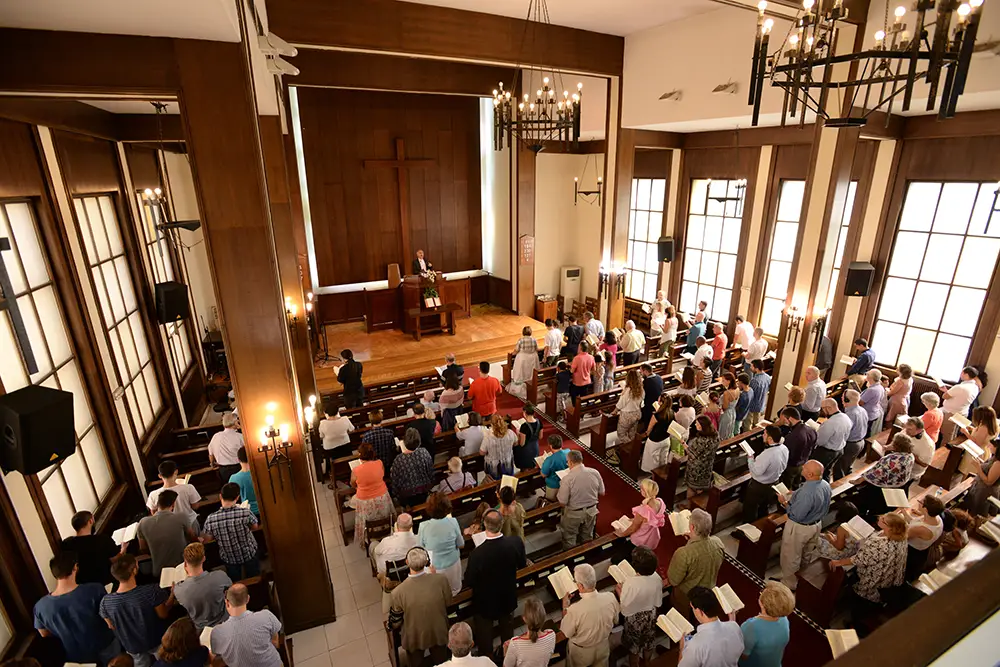
The gospel must also be preached
But deeds alone are not enough. The famous quote often attributed to St. Francis—“Preach the gospel at all times. If necessary, use words”—sounds nice, but it’s misleading. Deeds always require interpretation. A sign needs an explanation. The gospel must be preached.
That’s exactly what Peter does in Acts 3. He doesn’t just heal the man; he explains the miracle. He tells the crowd that Jesus—the one they rejected—has risen, is King, and offers forgiveness and life. Without Peter’s words, the miracle would have been inspiring but unclear.
Our compassion, justice, and service can make the reign of Christ believable to a skeptical world. But like Peter, we must intentionally point people to the King behind the kindness.
Even Nicholas Kristof, a New York Times columnist who often critiques evangelical Christianity, admits he’s repeatedly moved by the courage and sacrifice of believers on the front lines of suffering.
Kristof writes, “But in reporting on poverty, disease and oppression, I’ve seen so many others. Evangelicals are disproportionately likely to donate 10 percent of their incomes to charities … More important, go to the front lines, at home or abroad, in the battles against hunger, malaria, prison rape, obstetric fistula, human trafficking or genocide, and some of the bravest people you meet are evangelical Christians … who truly live their faith. I’m not particularly religious myself, but I stand in awe of those I’ve seen risking their lives in this way.”
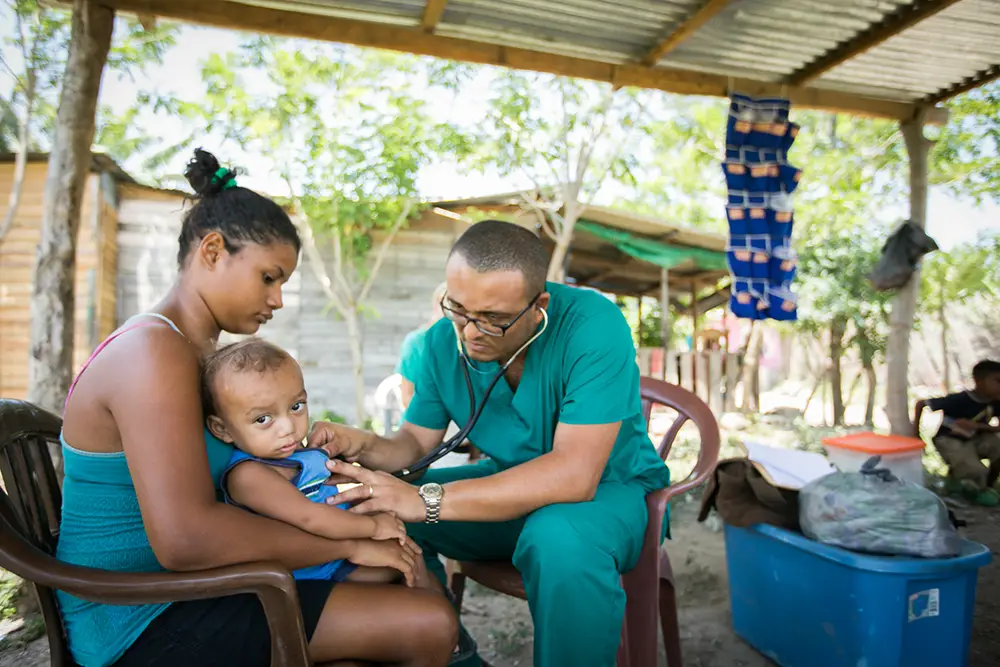
Real-world examples of mercy demonstrated by the Church
Mercy, justice, and the love of God is a key value of Mission to the World. It’s important to note that we always aim to tie mercy ministry to the local church. For example, in Phnom Penh, MTW has planted churches in multiple villages and cities while also opening a medical clinic and creating a dorm ministry for victims of sex trafficking.
Teranga Village in Senegal provides a haven for at-risk girls and is closely tied to Timothy House, a training center for pastors and church planters. During COVID, a pastor in South Asia distributed one month’s supply of rice, lentils, salt, and other basics to 561 families—many of them Muslims or Hindus—who were struggling to find enough to eat. After experiencing the love of Christ through this tangible act of mercy, many Hindus and Muslims were converted, baptized, and enfolded into the church. These ministries are a vital part of the churches’ ministries.
It is essential that we preach the gospel. Without it, no one can be saved. Yet, just as we see in the ministry of Jesus and the apostles, it is important that our proclamation is also accompanied by mercy, justice, and the demonstrations of the love of God.
Other articles in our “Values That Matter” series:

Mark Bates
Mark Bates is MTW's senior director of U.S. Operations. Mark has a B.A. in Greek from Bryan College and a master's degree from RTS. He served as youth and singles pastor at Orangewood PCA, and founded University Presbyterian Church in Orlando. From 2007-2021, Mark served as senior pastor of Village Seven PCA in Colorado Springs, Colorado. Mark and his wife, Tricia, have three daughters.
