How God turned an unbeliever’s search for answers into 48 years of MTW missions work in France
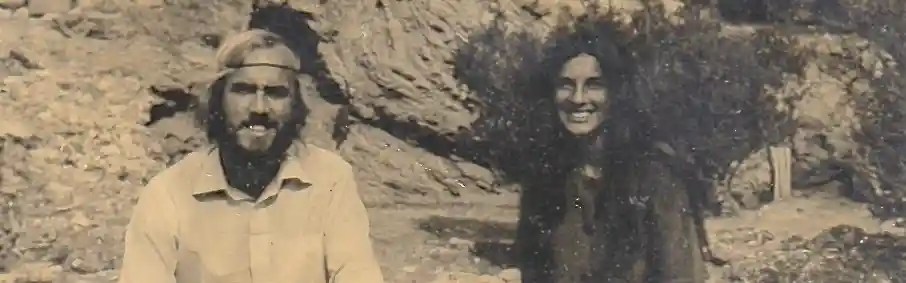
Before Hugh Wessel was MTW’s regional director for Europe, before he served as a missionary in France, before he even became a Christian, he was a 23-year-old hippie hitchhiking his way across Europe. One night during the summer of 1972, he knocked on the door of a home tucked in the Swiss Alps that he’d heard might be a place to crash while traveling.
When another hippie opened the door, Hugh thought, “That’s a good sign.”
“What is this place?” Hugh asked the man.
“It’s a Christian community,” the stranger replied.
Hugh muttered that he was not interested and turned to leave.
“You should be, because it’s the truth,” said the man.
“It’s your truth,” said Hugh.
“No, it’s the absolute truth.”
“There are no absolutes.”
“You just made an absolute statement,” the man replied calmly.
Their back-and-forth turned into a long, philosophical discussion. Eventually, the young man invited Hugh to stay the night. The home was part of L’Abri, a Christian community started by Francis and Edith Schaeffer in 1955 that welcomed people and provided a place for them to wrestle with and find answers to their ultimate questions.
For Hugh, L’Abri was the rudder that shifted the course of his life from one of restlessness and despair to one of freedom under the lordship of Jesus—and set him on the path of nearly 50 years of missionary work with MTW.
An existential crisis—and the salesclerk who led him to L’Abri
Hugh had been on a quest for answers when he knocked on the door of L’Abri. It had started during his time in the Army when he began asking himself and everyone around him questions like, “What is the meaning of life?” and, “How do I know that I exist?” Unfortunately, no one in the Army had a satisfying answer. When he was honorably discharged in 1968, he returned to New York City, worked for 3M, and attended evening classes at Hunter College. He immersed himself in every philosophy and movement he could find—Students for a Democratic Society, Black Panthers, Buddhists, Hare Krishnas—hoping someone could answer the questions that haunted him. This led to an existential crisis.
“No one had the answers,” says Hugh. “They kept telling me, ‘You think too much,’ and I kept telling them, ‘I can’t help it.’ It was a very distressing time for me. Finally, I became more and more depressed, bought a one-way ticket, and left America.”
He moved to Paris to reconnect with Martine, a young French woman he had met while stationed in Munich, Germany. Days before he left, he was shopping and explained to a salesclerk his plans to move to France and travel around Europe.
“She told me that she had a couple of addresses that might help me,” Hugh remembers. “She said they were places where people welcomed travelers and that I could crash there.”
The salesclerk handed him two addresses—one in England and one in Switzerland.
“She never told me what they were.”
Hugh and Martine spent the summer of 1971 exploring Europe in an old Volkswagen. A year later, while on another trip, they temporarily went their separate ways. Martine returned to France for work and Hugh hitched a ride to the Swiss address he had from the salesclerk.
And that is how he found himself on the steps of L’Abri in the summer of 1972.
God turns Hugh’s conversion into a burden for France
After his first night, Hugh woke up thinking he would immediately leave. But his host told him to at least stay for breakfast. Breakfast turned into lunch; lunch turned into dinner; dinner turned into another night’s stay. This pattern continued for six weeks.
“I stayed moment by moment,” Hugh says. “There were all these engaging discussions. I didn’t realize there was an entire community of Christians in that Swiss village receiving people like me from around the world and taking their questions seriously.
“And this man, Francis Schaeffer, he was very humble and very kind.”
Hugh had finally encountered Christians who neither dismissed nor trivialized his questions. Instead of telling Hugh that he thought too much, they provided thoughtful, intellectually satisfying answers which were backed by their kindness and hospitality. At the end of six weeks, the Holy Spirit captured Hugh’s heart and released his soul from the existential despair that had driven him for years.
“As soon as I was convinced Christianity was true and answered the questions I had spent years asking, I bowed the knee twice. Once to acknowledge that God exists, and then to confess Jesus Christ as my Lord,” says Hugh.
Francis Schaeffer baptized Hugh later that September.
When Martine arrived at L’Abri in November, she was genuinely astonished by the transformation she saw in Hugh. During the weeks that followed, the Lord likewise opened her heart, and she too confessed Christ as her Lord and Savior. In April 1973, Francis Schaeffer officiated their wedding in the nearby village of Ollon—a town associated with the 16th century reformer Guillaume Farel.
Their conversion gave the Wessels an entirely new way of seeing France.
“Mind you, when I first arrived in France, I did not like the French people,” says Hugh. “But after L’Abri, when I returned, I saw them as lost. They didn’t have shepherds. They didn’t have people who would patiently answer their questions. The Holy Spirit gave me a deep, deep compassion for the French people.”
When Hugh and Martine went back to France later that year, they had no plans to pursue any type of ministry career. They just felt called to live as faithful Christians, witness to their neighbors, and serve in their local church. Pastoral ministry did not cross Hugh’s mind until he called Francis Schaeffer asking for training on how to better lead a Bible study at his church.
Schaeffer’s answer was characteristically direct.
“If you want to teach the Bible,” he said, “you need to go to seminary.” Hugh took that advice to heart.
He enrolled at Westminster Theological Seminary in Philadelphia, where professors deeply committed to the authority of Scripture and the sovereignty of God’s grace helped shape his theological convictions. He graduated with his Master of Divinity in 1979 with plans to return to France, not because it seemed an easy field, but because God had given him an enduring love for the French people.
Those plans coincided with an important moment in Presbyterian missions. In June 1979, Hugh and Martine were commissioned by World Presbyterian Missions to open France as a mission field, just as WPM was merging with the newly-formed Mission to the World. This made the Wessels the first missionaries commissioned by MTW who had come from outside the Presbyterian Church in America. They were appointed to southern France to serve on a team with legacy missionaries Eugene Boyer and Peter and Rebecca Jones.
The Lord blesses difficult early years
In the fall of 1980, Hugh stood on his apartment balcony in Marseille, puzzling over how to open one of the welded-shut 55-gallon oil drums that held their belongings. He grabbed a chisel and a hammer and, in his words, began hammering away. Two and a half hours later, the lid finally opened. He had 13 more to go. Fortunately, a neighbor heard the hammering and offered his disk cutter. Hugh was able to open the rest of the oil drums in minutes.
“It was one of many reminders that the Lord often provides help through people when we have reached the end of ourselves,” says Hugh.
That lesson would characterize much of their first term. According to Hugh, returning to France felt like coming home, but almost everything seemed difficult when they first arrived. Their apartment was completely empty—bare tile floors, no appliances, and wires instead of light fixtures—and their limited finances disappeared quickly as they purchased beds, a stove, a refrigerator, and a washing machine. Hugh stumbled through language school while Martine tried to connect with the bourgeois women in the community, finding that acceptance into their circles did not come easily.
Ministry was also challenging. Hugh served at a local church and quickly realized the senior pastor was neo-orthodox, a theological tradition that denies that the Bible is the Word of God. Therefore, the pastor rarely preached from Scripture or taught the gospel of Jesus. Besides the Sunday morning worship service, the church didn’t offer any discipleship programs for their 20 members. Hugh’s relationship with the pastor was strained and progress was stagnant.
But like Hugh did with his chisel and hammer, the Wessels put their heads down to serve where God had called them. And just like with the oil drum, God provided help—mainly through the prayers of His people.
“We had over 4,000 people getting our prayer letter and 300 people had signed up to pray for us daily. The mission was blown out of the water by that. That was God’s grace in our lives,” says Hugh.
The Lord began presenting Hugh with opportunities to teach the gospel of grace. About a year after they arrived in Marseille, Hugh and the pastor led a catechism retreat for the 12-to-15 year olds in the church. One night, after the pastor went to bed, Hugh took the youth on a night hike and taught the gospel to them.
Half of them repented and believed in Jesus.
Hugh also started a Bible study for adults on Monday evenings. One woman told Hugh, “Mr. Wessel, the way you do Bible study, using the Bible to explain the Bible, I finally understand the terms and concepts I’ve heard my whole life.”
Perhaps the most impactful change God accomplished was in the senior pastor. Burdened by their relationship, Hugh told the pastor that he felt led to resign.
To Hugh’s utter shock, the pastor started crying and said, “I’m jealous of you.”
Hugh sat there recounting all the mistakes he’d made since arriving in France and wondered why on earth the pastor would be jealous of him. The pastor explained that he had never seen people come to faith in Christ; he’d never seen the church grow; he’d never been able to get people to consistently attend a Bible study like Hugh had.
“That’s not me,” said Hugh. “That’s the Lord.”
The two men prayed together, leaving the interaction with a renewed commitment to work together. And the pastor’s ministry transformed. He recognized the Bible as God’s living Word with the power to change lives. He started preaching the gospel. He stopped depending on his own abilities and started focusing on what the Lord was doing in the church. He and Hugh became the closest of friends.
“It was a rough, rough period. And yet the Lord blessed it,” says Hugh.
Through the power of God’s Word and Spirit, the people in the church grew spiritually and the membership of the church grew numerically. By the end of the Wessels’ first term in 1984, the church had multiplied from 20 to 80 people and, miraculously, was looking to plant another congregation.
God expands MTW ministries and Hugh’s role across Europe
During their first home ministry assignment in 1984, MTW’s Coordinator Paul McKaughan asked Hugh to lead a team in Marseille. The Wessels spent the rest of HMA recruiting new missionaries, visiting supporting churches, and casting a vision for France. After they returned the church grew steadily, not only in Marseilles but across the country. In 1989, MTW appointed Hugh as country director of France which included overseeing the new MTW teams and ministries forming in Paris and Lyon. He spent the next few years recruiting and training new missionaries, caring for missionary families, and working alongside the French partner denomination to help develop church-planting strategies that strengthened national leadership rather than create dependence on foreign missionaries.
Then history changed almost overnight.
When the Soviet Union collapsed in 1991, missions agencies throughout the evangelical world joined in an unprecedented cooperative effort known as The CoMission to take the gospel to former Soviet republics that had been closed to it for more than 70 years. MTW asked Hugh to provide oversight and pastoral care for MTW teams serving with The CoMission in Ukraine. During this time, Hugh said that he was impressed by both the spiritual hunger of the Ukrainian people and the enormous need for well-trained pastors and biblically grounded churches. When the CoMission partnership ended in 1995, Hugh continued to help MTW establish permanent church-planting teams in Ukraine and elsewhere in Eastern Europe, transforming what had begun as a short-term missionary initiative into long-term gospel ministry.
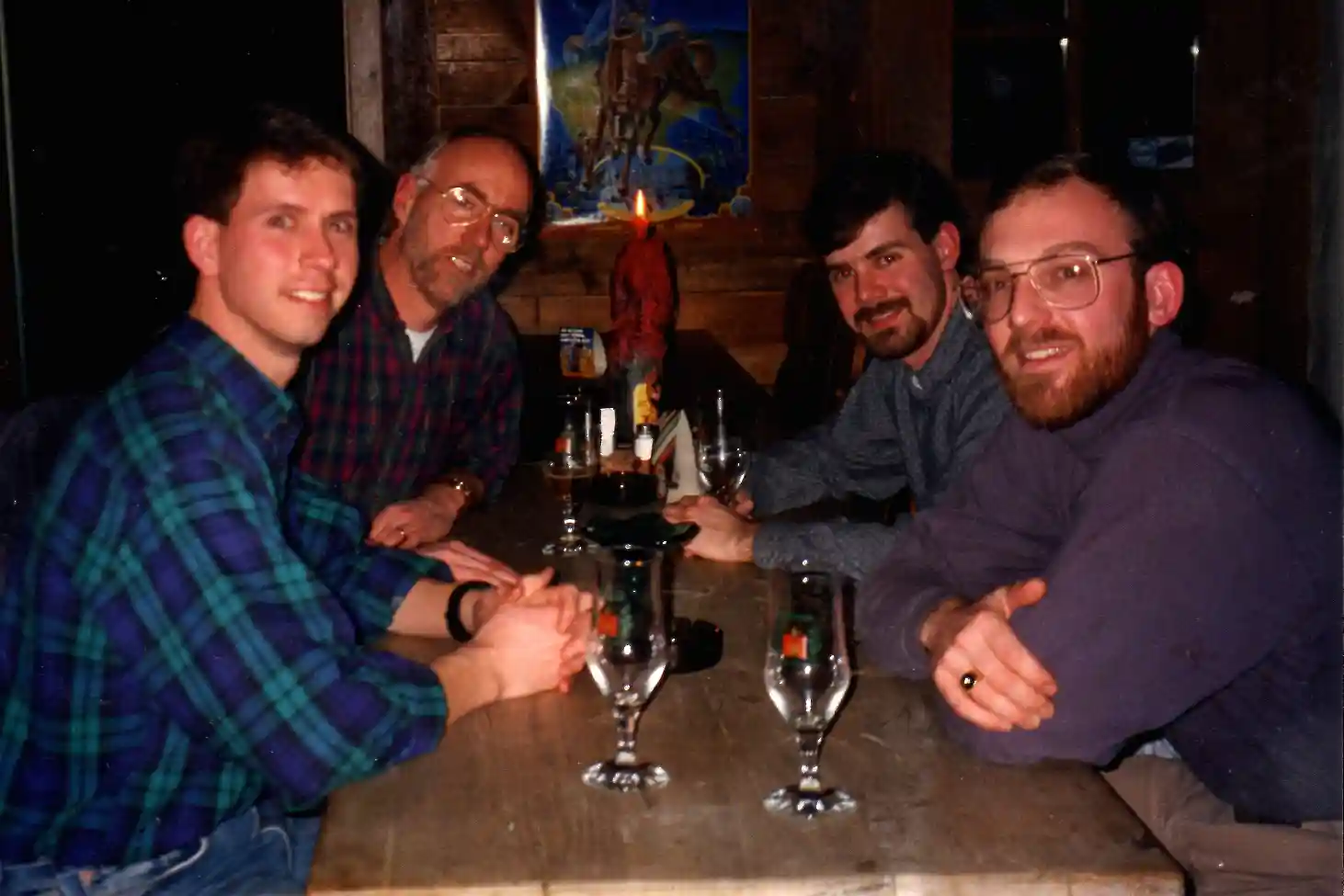
Around this time, he also began serving as MTW’s European regional director, supervising and caring for MTW teams throughout Europe and opening new fields across the continent. One year, an MTW missionary candidate requested to start work in Romania. Hugh, excited by the prospect of opening a new country, did a site survey to get a grasp of the needs. During this trip, a contact in Romania told him that there were thousands of new churches across the country. Hugh went to see this person and asked him where all the church plants were because he didn’t see any.
“It depends on what you mean by church,” said Hugh’s acquaintance.
“What do you mean?” asked Hugh.
“Well, where two Christians are gathered in Jesus’ name, it is a church,” said the Romanian man.
“I see,” said Hugh, realizing that they were counting all Christian gatherings as church plants and that Romania needed Reformed and covenantal churches. He returned to France and helped the missionary candidate who had originally requested to go to Romania begin a church planting team in the country that is serving there today.
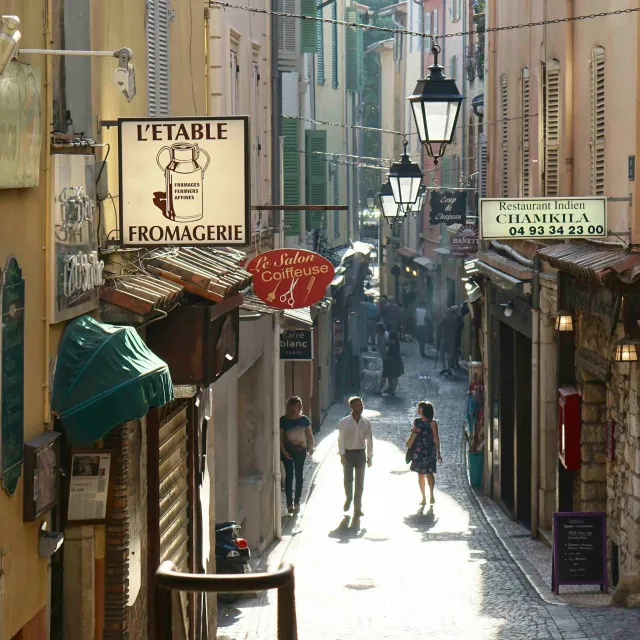
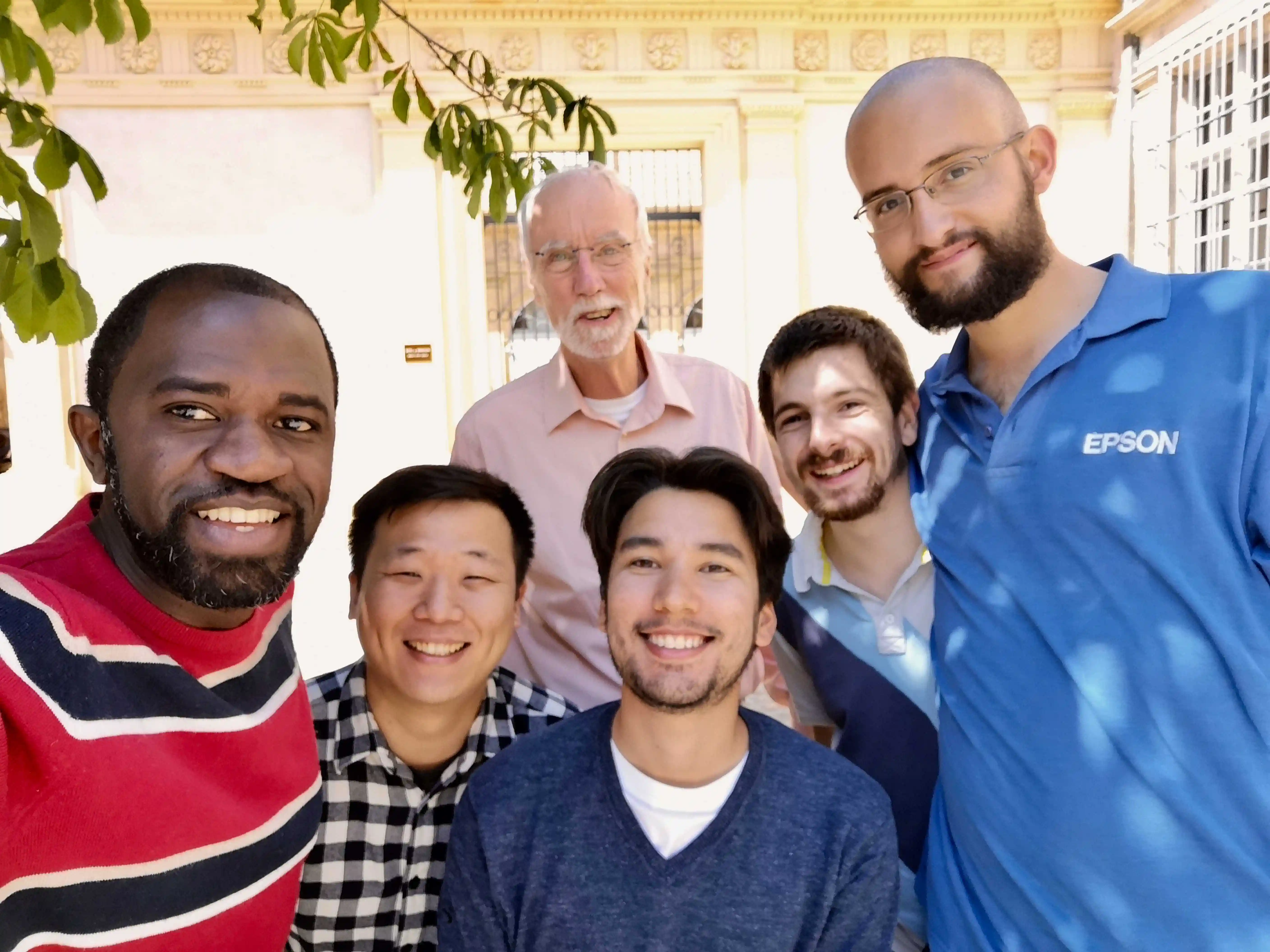
As his responsibilities with MTW expanded across the continent, Hugh never lost his burden for France and continued to serve the French people from his home in Marseille. After completing his service as regional director for Europe in 2001, France once again became Hugh’s primary focus. For the past 26 years, he has served as chaplain at the Faculté Jean Calvin in Aix-en-Provence and trains future French church leaders in teamwork, conflict resolution, mentoring, cross-cultural ministry, evangelism, servant leadership, and church planting.
Throughout all of his leadership roles, pastoral care remained the heart of his ministry. “Missionaries need shepherding too,” says Hugh.
Whether encouraging an isolated missionary family, helping teams navigate cultural differences, or mentoring new leaders facing difficult decisions, Hugh said that he seeks to strengthen those who were investing their lives in the gospel.
Hugh reflects on how God has shaped Him
As Hugh reflects on the past 50 years, he says that he now sees that God had been accomplishing two distinct yet interconnected works: building His church and conforming Hugh into the likeness of Christ.
Hugh said that there were many times over the years where the growth and maturity of the church seemed stagnant. He, like so many missionaries, wondered if his labor was making a difference. But God was building His kingdom in France, even when Hugh couldn’t see it, and gospel ministry in the country continues.

“The missionaries can easily become discouraged because sometimes it appears nothing is happening. But when I look back over 50 years, I see that those efforts continue to be a blessing. Churches are still there. Pastors are still preaching. The seminary continues to prepare men for ministry. What seemed small at the time has become part of something much larger.”
“The missionaries can easily become discouraged because sometimes it appears nothing is happening. But when I look back over 50 years, I see that those efforts continue to be a blessing. Churches are still there. Pastors are still preaching. The seminary continues to prepare men for ministry. What seemed small at the time has become part of something much larger.” says Hugh.
Hugh has also witnessed a remarkable change in France. According to him, people were hostile to the gospel when he first arrived. Eventually, that hostility turned into indifference which has turned into a growing openness to Christ and His church. Many French are going to church without anyone inviting them—something that was not happening 40 years ago.
As amazed as Hugh is at how God advanced the gospel in France, he is even more in awe of the way the Holy Spirit softened his heart to greater dependence and appreciation of Christ.
“I thought I was carrying the gospel,” says Hugh. “Looking back, I believe it was the risen Christ who was carrying me. I used to measure progress by churches planted, ministries established, missionaries recruited, and new opportunities opened. Now I no longer think first about what I accomplished for Christ. Instead, I marvel at what Christ accomplished within me.”
Last year, the Lord brought Hugh through one of the deepest trials of Hugh’s life—the illness and passing of his beloved wife, Martine. For more than 50 years, they served side by side, encouraging each other, other missionaries, and Christians in France. Hugh said that her passing left an emptiness that words cannot adequately express.
Yet even during the season of grief, the Lord showered Hugh in the love of His people and showed Hugh new depths of His grace. Missionaries, pastors, supporters, and MTW church staff surrounded Hugh with prayer, Scripture, and words of encouragement.
“Everybody told me that when you go through deep suffering, it opens places in your soul you never knew existed. That proved to be true. Alongside profound sorrow, I experienced profound grace,” says Hugh. “I am deeply grateful for the compassion I received. It was immense.”
It was the same compassion that met Hugh on the steps of L’Abri all those years ago. It was the compassion that drove Hugh to serve the French people and shaped his ministry career. It is the compassion that sustained Hugh through the challenges, disappointments, unanswered questions, cultural struggles, and doubts of the past 50 years.
It is the compassion of Jesus Christ, who claimed a restless hippie from a life of wandering and used him to build the Church in France and across Europe. For that Hugh says that he remains profoundly grateful.
“I feel so small but so filled with gratitude to the Lord,” says Hugh. “I’m just a kid from Brooklyn who grew up in a working-class neighborhood. I had empty hands. I was a horrible sinner and God intervened in my life through Francis Schaeffer and others. Through the prayers of many, He transformed me. I have a deep, eternal gratitude to Him.”
If you’d like to support Hugh’s work in France, visit his missionary profile.

Get good news every week! Subscribe to Stories & More for stories of God's work, videos from the missions field, and a wide range of missions topics.

Chelsea Rollman
Chelsea Rollman is a marketing specialist and staff writer at MTW. She formerly served as the girls’ discipleship coordinator at Village Seven in Colorado Springs, and as a marketing assistant at The White Horse Inn. Chelsea graduated from Covenant College in 2016 with her B.A. in English. She and her husband, Hudson, live in Jacksonville, Florida, and attend Christ Church Presbyterian where Hudson serves as the youth director.