Cultivating a culture of expectancy in missions

Ever since I was young, my steps of faith into ministry have been hugely impacted by people around me who noticed my gifts, affirmed my capabilities, and encouraged me to spread my wings. These people didn’t stop at celebrating the ways God was currently at work in my life, but rather they asked the question, “How might God use her next?”
As a result, the church helped cultivate in me an expectancy of how God might use me for His kingdom. I can’t help but consider how churches today can proactively create a culture of expectancy in missions in their congregations.
A path paved with encouragement
When I was 16, the children’s ministry leader at my church noticed the way I enjoyed helping teach children’s classes, and one summer she asked if I would like to be the lead teacher for a vacation Bible school class. I was incredibly honored and excited to give it a try. I had a blast leading that class, and I gained so much from the experience—not least of which was the confidence to try something that felt big.
A few years later, while in college, a classmate asked me if I would consider serving in student government alongside her. I was completely taken aback by this request because I had never taken any interest in that sort of thing, but she told me she had noticed qualities of responsibility and attention to detail in me that she thought made me a good candidate. I was so honored by her confidence in me that I accepted the role. Again, I learned so much from the experience.
Sometime later I received an email from a professor suggesting that I register for a missions class he planned to teach the following semester. The course would involve spending time in Rwanda over fall break and required that I raise funds for the trip. He explained that he had been praying about who would be the right students to take the class, and as he considered different people whom he had observed and interacted with on campus, I came to his mind. I had not intended to take a missions class, miss out on fall break, or raise funds over the summer, but because this professor (who I respected) went out of his way to notice potential in me, I prayed about it and decided to take the class.
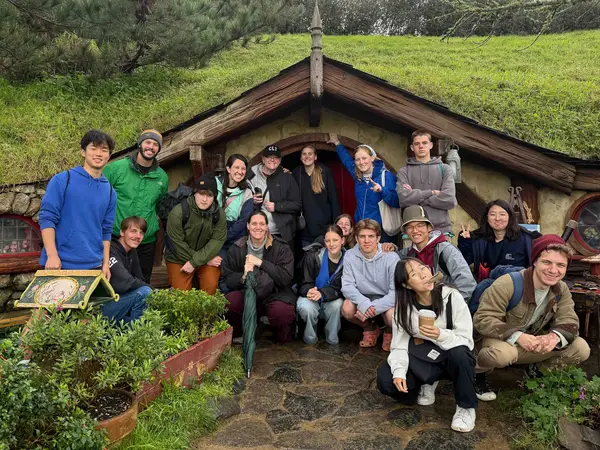
I could name many other such instances along my journey into missionary service. God was certainly drawing me all along, but He used people in my life who intentionally noticed the ways God had grown me and who lived out of the expectation that He wasn’t done. Much like the wizard in Tolkein’s “The Hobbit” who suggested to Bilbo that he was ready for “an adventure,” these people in my life anticipated that God was preparing me for something more, and exercised their influence to nudge me forward.
William Carey famously exhorted, “Expect great things from God; attempt great things for God.” I think we have often applied this appeal toward those who are already engaged in missionary work, but I would propose that we apply it much more broadly. Average church members who recognize and celebrate what God is doing in those around them can have a huge role in propelling fellow disciples toward small steps of faith—steps which over time accumulate into lives of incredible kingdom impact locally or around the world.
How might you help cultivate a culture of expectancy in mission in your context? Here are a few principles to consider.
1. Expect
Expect that God is already at work in the people in your church (Philippians 2:13; John 5:17). Consider first those closest to you—those in your small group, Sunday school class, or Bible study. Who do you see God using in big or small ways? Who has helped you in your own journey? Who serves behind the scenes? Who has been willing to try something new or share vulnerably from their own experience for the good of the body? Take a moment to thank God for His work in these people and ask how you might speak words of encouragement and affirmation to them.
2. Notice
Notice and celebrate what you see God doing (Psalm 92:4). Consider naming specific qualities that you see God developing in people around you. Write them a note expressing thankfulness for the way they have used their gifts. Acknowledge real fruit that has been born through their steps of obedience. If you are in a position of leadership, consider finding ways to spotlight how God is growing His kingdom in your midst through regular people. Always give God the credit for His work in people as you encourage and spur on His servants with words of affirmation and celebration.
3. Ask
Ask Christ-followers around you what they see God doing in and through them (Psalm 107:2). Be curious about those things. Ask questions like, “What has God been doing in your life lately?” or “What has discipleship to Christ been like for you this year?” As you hear stories of God’s faithfulness and prodding, encourage people to celebrate and share His work in their lives with others. We often downplay God’s work in our own lives and need the acknowledgement of others to help us see it for what it is.
4. Model
Model boasting in the Lord’s work in your life as the apostle Paul did (Romans 15:17-18). When you notice God meeting you in your weakness and using your obedience to bless others, acknowledge it and celebrate with friends. Recognizing and celebrating God’s hand in your life will help normalize it for other people and set up wonderful opportunities for discussing the ways God is growing and leading them.
5. Be curious
Be curious about the story God is writing in the people around you and consider what your own role might be in helping them to take their next step of faith. Be confident, as Paul wrote, “that He who began a good work” in them will “carry it on to completion” (Philippians 1:6). How might you be part of the “cloud of witnesses” (Hebrews 12:2) cheering on those around us as they press further on and deeper into the kingdom work God has for them?
As friends, family members, teachers, and leaders of all kinds, stewarding the relationships God has given us means living with expectancy about what God is up to in people’s lives. As we encourage, affirm, resource, connect, pray with, and minister alongside fellow disciples, we help them along their journey of faithfulness to God’s global mission, and we play a significant role in mobilizing laborers for the harvest. You never know what God might do in someone’s life when you help them take the next small step.

Laura Dougherty
Laura Dougherty, along with her husband, Derek, and two children, served in church-planting with MTW’s team in Cusco, Peru, from 2016-2021 helping to plant a local church. Laura and Derek also served with MTW’s learning team in training and development for new missionaries. They are passionate about helping others grow in their walk with the Lord and preparedness for ministry through group learning and interchange.